
Holy Monday is the second day of Holy Week and marks a pivotal moment in Jesus’ final days before the cross. According to the Gospels, Holy Monday is commonly associated with Jesus cursing the fig tree, cleansing the temple, and confronting empty religion with a call to genuine faith. These events reveal Christ’s authority, His passion for true worship, and the spiritual significance of the week leading to Easter.
Can you imagine how the disciples felt on the Monday after Palm Sunday (referred to as Holy Monday)? Just the day before, Jesus had made his grand entrance into Jerusalem. He had ridden in on the foal, the colt, of a donkey that no one had ever ridden. All of this is in fulfillment of the prophecy found in the Book of Zechariah:
Rejoice greatly, Daughter Zion! Shout, Daughter Jerusalem! See, your king comes to you, righteous and victorious, lowly and riding on a donkey, on a colt, the foal of a donkey (Zechariah 9:9).
The disciples followed this man, Jesus, for three years. They had witnessed all of the miracles, but more importantly, they had been with him virtually every hour of every day. They knew this man. Peter had declared him to be “…the Messiah, the Son of the Living God” (Matthew 16:16). Their hearts must have been overflowing with expectation. They were the first to throw their cloaks on the donkey and the ground in front of Jesus. But they were indeed not alone in their celebration. Many people celebrated the King's coming into Jerusalem, throwing their own cloaks on the ground. Many others grabbed branches of trees — assumed to be branches of palms — to place on the royal pathway. They yelled out, “Hosanna to the son of David! Blessed is he who comes in the name of the Lord! Hosanna in the highest!” (Matthew 21:6-9). “Blessed is the king of Israel!” (John 12:13).
Download our FREE Holy Week Prayer Guide to lead you in praying each day of Holy Week.
What Is Holy Monday, and Where Does It Fall in Holy Week?
Holy Monday is the Monday of Holy Week, the sacred week leading up to Easter Sunday. It follows Palm Sunday and is traditionally remembered as the day Jesus cursed the fig tree, cleansed the temple, and continued teaching in Jerusalem. For Christians, Holy Monday highlights Christ’s authority, His zeal for true worship, and His warning against outward religion without real faith.
As this triumphal entry took place on a Sunday, we can only imagine the exhilaration his disciples — and the people — felt. After all, they expected a conquering king to free them from the domination of the Roman Empire. To free them from their slavery in Rome. Their expectation was for a conquering king. Little did they expect what began the very next day — Monday. But Jesus knew. Jesus knew he would fulfill every promise, every Old Testament prophecy — and it was coming down to the final week.
Holy Monday. The second day of what we now call Holy Week. The last Monday leading up to Easter, or Resurrection Sunday. The triumphal entry of Jesus into Jerusalem is remembered and celebrated on Palm Sunday. It provides a prelude to many sad events leading up to the death and resurrection of Christ Jesus. Of course, knowing the outcome, we recognize the events for what they were — but to his disciples at the time, these days must have been increasingly disturbing, ultimately culminating in his death. We can be sure that the disciples considered the week anything but holy — that is, until the following Sunday.
It is clear, though, that what occurred was a deliberate march by Jesus toward the cross as he intentionally and progressively pointed out the hypocrisy and corruption of the religious leaders of the day.
What Happened on Holy Monday? Fruitless Faith and a Temple Cleansed
Upon this celebratory entry into Jerusalem, the Pharisees had ordered Jesus to silence the crowd’s joyful praises (Luke 19-37-39). Then, only five short days later, Pilate would be unable to silence that same crowd calling for Jesus to be crucified. It is worth asking — what did Jesus do and say during that final week, Holy Week, that caused such a dramatic change of heart? Jesus would use the next day, the second day of Holy Week, to demonstrate what true faith in God meant, and to affirm his authority as the Son of God. Holy Monday.
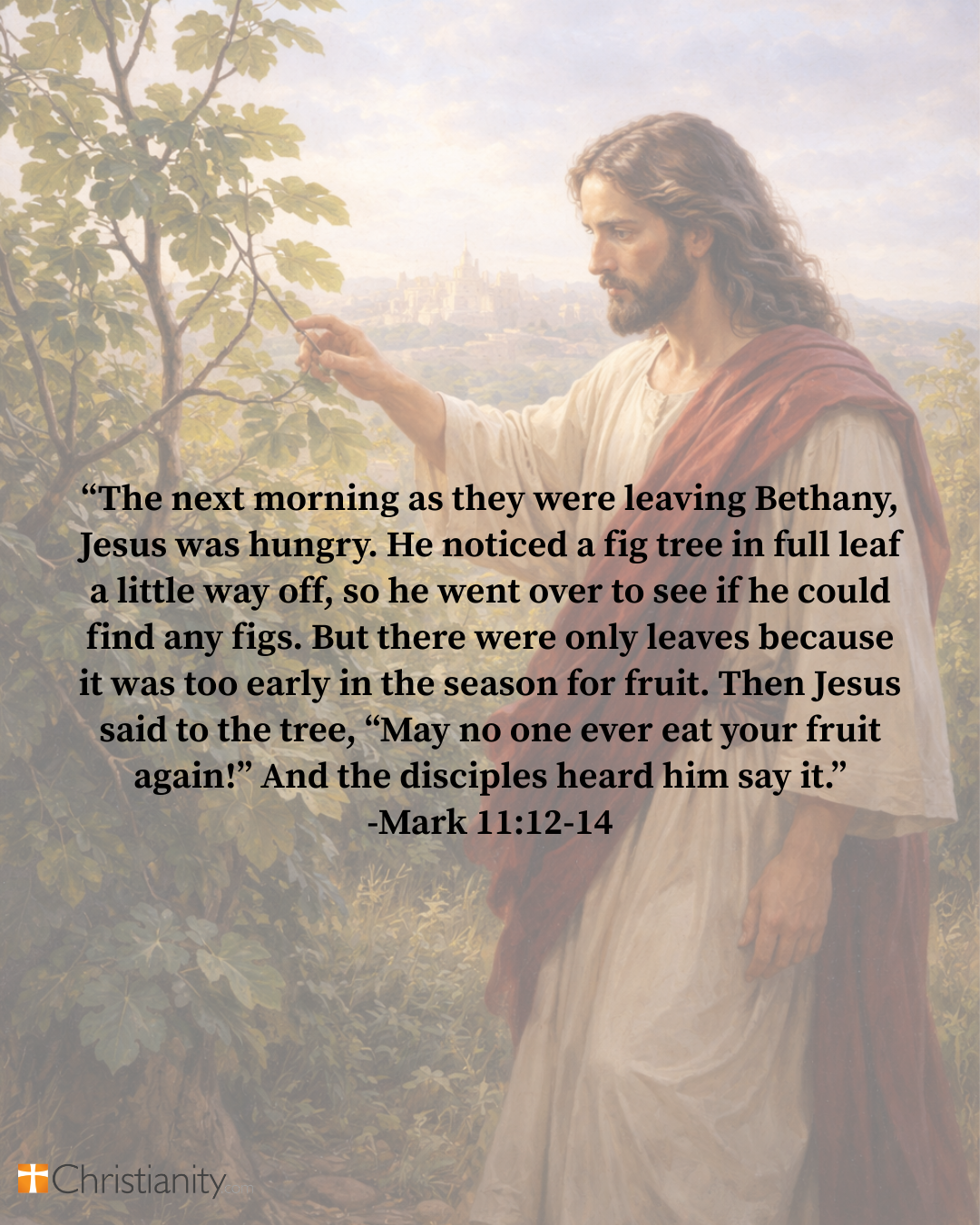
The Gospel of Mark tells us that upon entering Jerusalem, since it was already late, Jesus went to Bethany with the Twelve. Bethany was only a short mile away, at the foot of the Mount of Olives (Mark 11:11). The next morning, Monday, it all began. Upon leaving Bethany the next morning, Jesus and his disciples passed by a fig tree that was full of leaves but bore no figs. Completely fruitless. Since the tree could have been expected to bear fruit just two months or so later, there should have at least been unripe fruit to eat, but there was none. Jesus cursed the tree for being fruitless, and it withered by the next day.
Jesus was about to judge a generation of those who practiced the rites and rituals of a fruitless religion. He used the moment to teach the disciples about genuine faith — such that faith even the size of a mustard seed could move mountains when it is aligned with God’s will (Matthew 21:21-22). Indeed, the faith of his disciples would be greatly tested in the coming days. Jesus proceeded to the courtyards around the temple. He found utter irrelevance for the Lord’s house of prayer.
He proceeded to overturn the tables of the money changers doing business there, driving them out of the temple and accusing them of making His Father’s house a “den of thieves” (Matthew 21:13; Mark 11:17; Luke 19:46). The purpose of the money changers was to provide a service to pilgrims traveling great distances to celebrate Passover but who could not bring their own animals for sacrifice or needed to exchange foreign currency for money acceptable for temple offerings. But the temple leadership during this era was notoriously corrupt. The money exchange was nothing short of highway robbery of these pilgrims, ensuring a high profit for the priests. However, Jesus’ rebuke of the money changers was clearly directed right at the temple leadership — and they knew it (Luke 19:47-48).
The Beginning of the End — of the Beginning
Following this, Jesus spent the day teaching in and around the same temple courts. The tension must have been palpable for the disciples, as Jesus was continually confronted by the same chief priests, teachers of the law, and elders.
- They challenged Jesus’ authority (Luke 20:1-7; Mark 11:27-33).
- They tried to trick Jesus into breaking Roman law (Mark 11:13-17).
Jesus used many parables in his teaching — simple stories that illustrated important lessons. This time was not much different, except that rather than teaching about our own lives, his lessons were about the kingdom of God, telling his listeners what they, and we, must do to prepare for his return and the coming judgment. In the parable of the tenants, the religious leaders knew they were the evil farm tenants (Mark 12:12). Upon finishing the parable of the two sons — one who says he won’t obey, then does; the other who says he will obey but doesn’t, Jesus says this:
"Truly I tell you, the tax collectors and the prostitutes are entering the kingdom of God ahead of you. For John came to you to show you the way of righteousness, and you did not believe him, but the tax collectors and the prostitutes did. And even after you saw this, you did not repent and believe him." - Matthew 21:28-32
In the parable of the wedding banquet, “Jesus spoke to them again in parables, saying: ‘The kingdom of heaven is like a king who prepared a wedding banquet for his son. He sent his servants to those who had been invited to the banquet to tell them to come, but they refused to come” (Matthew 22:1-3). Ultimately, Jesus tells them, “For many are invited, but few are chosen” (Matthew 22:14).
The Coming Judgment
Holy Monday, indeed! It was a Monday like no other. If the religious leaders and teachers of the law had been worried about Jesus before, and they were, after Holy Monday, they were infuriated and wanted him dead. He was a threat to their way of life. The stage had been set.
Today, we, too, see the stage being set and Christianity under attack. The judgment is coming, and those who are on the attack are also perhaps worried that we might disturb their way of life. So, are our hearts prepared for His return? And are we sharing the salvation that was bought at a price and given in grace with love and kindness to others?
Why Holy Monday Still Matters for Christians Today
Holy Monday reminds believers that Jesus cares deeply about the condition of our hearts, not just outward religious activity. The cursed fig tree is a sobering picture of fruitless faith, while the cleansing of the temple shows Christ’s holiness and His desire for sincere worship. Holy Monday calls Christians to examine their lives, repent of empty routines, and follow Jesus with genuine faith and obedience.
Frequently Asked Questions About Holy Monday
What happened on Holy Monday in the Bible?
Holy Monday is commonly associated with Jesus cursing the fig tree, cleansing the temple, and continuing to teach in Jerusalem during Holy Week.
Why is Holy Monday important?
Holy Monday is important because it reveals Jesus’ authority, His passion for true worship, and His warning against empty religion without spiritual fruit.
Is Holy Monday part of Holy Week?
Yes, Holy Monday is the second day of Holy Week, which begins with Palm Sunday and leads to Easter Sunday.
What does the fig tree on Holy Monday represent?
The fig tree represents fruitless faith and serves as a warning against outward appearances of religion without genuine righteousness and obedience to God.
For further reading:
Jesus' Triumphal Entry: The Bible Meaning of Palm Sunday
What Is Palm Sunday and Why Do Christians Celebrate It?
What’s So Good about Good Friday?
What Is Easter Sunday and Why Is it the Most Important Christian Holiday?
Photo Credit: ©iStock/Getty Images Plus/Aramyan

Greg doesn’t pretend to be a pastor, a theologian, or a Bible expert, but offers the perspective of an everyday guy on the same journey as everyone else – in pursuit of truth.
Greg can be reached by email or on Facebook @ Greg Grandchamp - Author.


.webp)
